Health care shouldn't be this hard.
No one should be one diagnosis away from fear, delay, or debt.
David Jolly's health care plan for Florida expands Medicaid to cover hundreds of thousands of uninsured Floridians and invests in more primary care clinics throughout the state so people can access care when and where they need it, regardless of income. Medicaid expansion can start within months once the Legislature approves it, with coverage beginning in the first year. Jolly proposes a 5-year pilot to dramatically expand community health centers in every Florida county so care is available, not just coverage on paper.
As Governor Health care
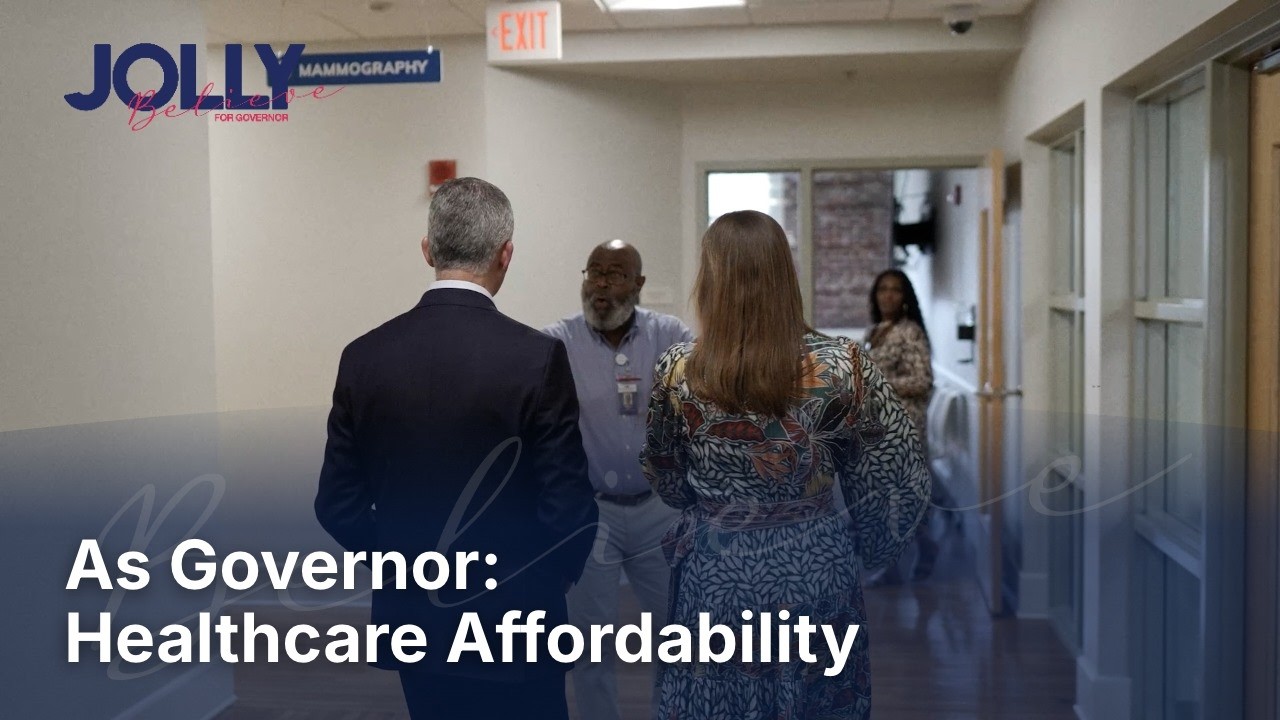
David Jolly on health care in Florida
This system isn't working for the people who need it.
Across Florida, families are making impossible choices when it comes to health care. Delaying treatment. Skipping appointments. Hoping that what they are dealing with doesn't get worse.
Not because they don't care about their health. But because the system makes it too complicated, too expensive, and too uncertain.
No one should have to wonder if they can afford to get care. No one should be forced to choose between their health and their financial stability.
And yet, that's exactly where too many people find themselves.
Expanding Medicaid is part of the solution. It would provide coverage to hundreds of thousands of Floridians who are currently left without access to care.
But it's not enough on its own.
Because access isn't just about coverage. It's about whether care is actually available when and where people need it.
That's why Florida should invest in more primary healthcare clinics throughout the state. Places where people can go, regardless of income, to receive basic care, support, and treatment.
Not as a long-term substitute for a better system. But as a way to make sure people aren't left waiting while bigger solutions take shape.
Health care should be built around people. Not barriers.
And right now, there are too many barriers standing in the way.
Getting care shouldn't feel like a risk.
It should feel like a guarantee.
Join the fight for accessible health care in Florida
Real solutions start with real action. Stand with David Jolly to expand health care access across Florida.
Get involvedFrequently asked questions
Q. Why isn't Medicaid expansion enough on its own?
Because expansion provides coverage, but people still need somewhere to actually get care. Jolly proposes a 5-year pilot to dramatically expand community health centers in every Florida county so new enrollees can connect with primary care providers, not just have coverage on paper.
Q. How long would this plan take to actually help me?
Medicaid expansion can start within months once the Legislature approves it, with coverage beginning in the first year. Scaling community health centers takes longer, which is why Jolly proposes a 5-year build to create durable access alongside the immediate coverage.
Q. Does this plan raise my taxes as a Florida resident?
No. The plan uses Florida tax dollars already being collected, paired with a 9-to-1 federal match. The state share is offset by reduced emergency care costs, lower uncompensated care payments, and increased tax revenue from a stronger healthcare workforce.
Q. How would this plan affect rural Floridians?
Rural counties have been hit hardest by healthcare gaps. Jolly's plan scales community health centers in every county, including rural areas where private practices are unviable, and stabilizes rural hospital revenue by reducing uncompensated care through Medicaid expansion.
Q. What if I am a small business owner in Florida?
Small businesses struggle to offer coverage because they cannot get the group rates large employers negotiate. Medicaid expansion would let your lowest-paid workers have a coverage option instead of being stuck in the coverage gap, and it stabilizes the market where you and your employees buy insurance.
Q. How does Florida rank for healthcare nationally?
Poorly across most measures. Florida has one of the highest uninsured rates in the country at 15.5% for working-age adults, ranks among the worst states for maternal mortality, and has about 266,000 adults shut out of both Medicaid and marketplace subsidies.
Q. What if the federal government cuts the 90% match?
The 90% match is set in statute, not annual appropriation, which means it cannot be changed without an act of Congress. Any change would also disrupt 41 states' Medicaid programs, including red states like Indiana and Ohio, which makes a partisan cut politically difficult. Florida could adopt trigger provisions that would automatically roll back expansion if the federal match drops below a certain level.
Q. How would this plan affect Florida hospitals?
Florida hospitals would see two direct benefits. First, Medicaid expansion would shift much of the uncompensated care burden to the federal government at the 90% match rate. Second, scaling community health centers reduces preventable ER visits by triaging patients in primary care.