Are school vouchers in Florida actually helping families in need?
Increasingly, no. After Florida made vouchers universal in 2023, about 69% of new voucher recipients were already enrolled in private schools, meaning the program has largely become a tuition subsidy for families who could already afford private school rather than an opening for families who could not.[1] David Jolly's plan keeps vouchers for families who genuinely need them, but means-tests the program and requires voucher schools to meet the same standards public schools do.[2]
The short answer, at a glance
Mostly subsidizing existing tuition
About 69% of students newly using vouchers after the 2023 universal expansion were already enrolled in private schools.[1]
Tuition on top of the voucher
Many private schools take a voucher and still charge tuition, pricing out the low-income families the program was built to help.[3]
Jolly reforms, not repeal
Means-test the program, cap tuition inflation, and require equivalent services. Keep vouchers for families in genuine need.[2]
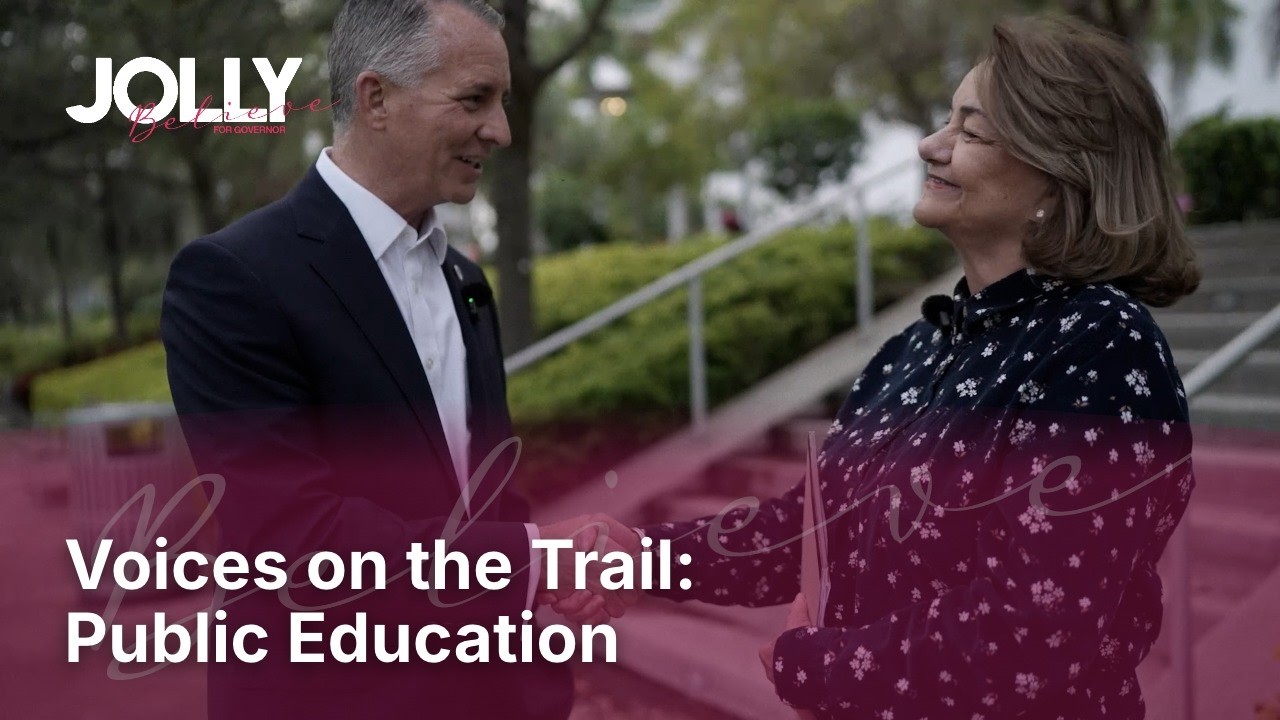
Education Interview: David Jolly talks with a longtime Miami-Dade educator about what school choice has become in Florida. Watch on YouTube.
What the numbers actually show
School choice was supposed to be about access. About giving a family with limited means a door that used to be closed. But the numbers tell a different story now. When Florida made vouchers universal in 2023 with HB 1, income limits disappeared. Roughly 69% of students newly using vouchers after that expansion were already enrolled in private schools.[1] That is the structural fact underneath everything else. The program is largely paying tuition for families who were already paying it themselves.
The cost tracks that story. The Florida House's own fiscal analysis of HB 1 projected roughly $209.6 million a year. Actual voucher and scholarship spending in FY 2024-25 came in around $3.9 billion, about 19 times the original projection.[4] The Florida Policy Institute had projected close to $4 billion by modeling the students who would migrate once income limits fell. They were right. This is what David Jolly means when he calls the current voucher model one that is likely to collapse.[2]
Why the campaign calls it a false choice
A 40-year Miami-Dade educator put it plainly in a conversation with David Jolly: when you tell a parent they can choose, but the private options are de facto private schools charging tuition on top of the voucher, it is a false choice.[5] Voucher-accepting private schools in Florida are not required to administer state assessments, hire certified teachers, follow the state academic standards, or serve students with disabilities the way public schools must.[6] A family with a child who needs special education services can lose those services the moment they leave a public school on a voucher. That is not access. That is a gap.
This isn't an argument against choice. It's an argument for honest choice. Jolly's position is that if Florida funds public education properly and builds a world-class system, families will choose it in a school-choice environment.[3] The reform is targeted, not total: cap the rate of tuition inflation for voucher students, require voucher schools to provide the same specialized services public schools provide, and means-test the program so funding reaches families with demonstrated economic need.[2] That returns the voucher to what it was originally promised to do.
This page answers one question. For the full picture of David Jolly's approach to public education, including the 10-year renaissance in school funding and teacher pay, see the campaign's public education plan.
Frequently asked questions
Q. Don't vouchers help low-income families afford private school?
The original FES program (pre-2023) was targeted at low-income families and worked as intended for that population. The 2023 universal expansion removed income limits, and the result has been heavily skewed toward families already in private schools. About 69% of new voucher recipients after HB 1 were already enrolled in private schools, meaning the expansion functioned as a tuition subsidy rather than expanding low-income access. Jolly's means-testing reform would restore the targeting to families who actually need the program to access private school, the use case the original voucher framing promised to serve.[1]
Q. Isn't school choice good for parents?
School choice as a principle has broad support. The question is how it's structured. Florida's universal voucher program (HB 1, 2023) gave every family, regardless of income, access to public dollars for private school. The result: about 69% of new voucher recipients after the 2023 expansion were already enrolled in private schools, meaning the program is largely subsidizing existing tuition payers rather than expanding access for kids who couldn't afford private school before. Jolly's reforms would preserve school choice as access, keeping vouchers for families who need them, while removing the universal subsidy for higher-income families using vouchers to reduce existing tuition costs.[1]
Q. Does Jolly want to eliminate vouchers entirely?
No. Jolly's position is structural reform of the voucher program, not elimination. The three changes he proposes, tuition inflation caps, equivalent specialized services, and means-testing, would still leave a functioning voucher program for low-income families who genuinely need school-choice options. The reforms target the dynamics that turn universal vouchers into a tuition subsidy for families who were already in private school (about 69% of new voucher recipients after the 2023 expansion). The goal is to make voucher dollars do what they were originally promised to do: expand access for kids who otherwise couldn't attend private school.[1]
Q. How much do Florida vouchers cost the state?
Florida spent approximately $3.9 billion on voucher and tax-credit scholarship programs in FY 2024-25, $2.8 billion in FEFP-funded vouchers plus $1.1 billion in tax credit scholarships. The Florida House's original fiscal impact analysis for HB 1 (2023) projected $209.6 million in annual cost. Actual spending is roughly 19 times that projection. The Florida Policy Institute and Education Law Center had projected approximately $4 billion based on accurate modeling of student migration. They were right; the House analysis was not. This trajectory is the basis for Jolly's framing that the voucher program is built on an economic model that is likely to collapse.[4]
Q. What about students with disabilities?
Special-education classrooms have the largest teacher vacancies in Florida, and the FEA identifies students with disabilities as the area of greatest need. The voucher program's structural problem for special-needs students is that voucher-accepting private schools are not required to provide the same special-education services that public schools must legally deliver. A parent of a child with disabilities who uses a voucher to leave public school often loses the special education service plan (IEP) and accommodations their child needs. Jolly's reform requiring private voucher schools to provide the same specialized services would close that gap.[7]
Q. What's the difference between public schools and voucher private schools?
Public schools must follow state academic standards, hire certified teachers, administer state assessments, serve all students (including those with disabilities and English learners), and report performance data publicly. Voucher-accepting private schools in Florida are not required to meet any of those standards. They can set their own curriculum, hire uncertified teachers, decline to administer state assessments, refuse to serve students with special needs, and operate without performance accountability. This asymmetry is the basis for Jolly's reform pushing voucher schools to provide the same specialized services public schools provide.[6]
Q. What is the Florida voucher program?
Florida's voucher / scholarship program lets families use public dollars to pay private school tuition, homeschool expenses, or other educational costs. The program expanded dramatically with HB 1 (2023), which made vouchers universal, no income limit. The main vouchers are the Family Empowerment Scholarship (FES) and Florida Tax Credit Scholarship (FTC), administered primarily by Step Up For Students. In FY 2024-25, Florida spent approximately $3.9 billion on voucher and scholarship programs. About 1.4 million Florida students now use a school of choice option; more than 500,000 attend a private school on a voucher.[1]
Q. Who is winning from the current voucher system?
The scholarship administration nonprofits, chiefly Step Up For Students and AAA Scholarship Foundation, earn fees on each voucher processed, so the volume of voucher growth has grown their organizational budgets. Step Up For Students has been a major political advocate for voucher expansion since its founding, and now sits in a position where its operating revenue depends on continued expansion. In the Education Interview, David Jolly names the people winning from today's system: the for-profit charter schools, the grift, the graft, the special interest, and the corruption. His argument is that today's system isn't serving Florida's kids.[8]
Q. What's the research on voucher outcomes?
Peer-reviewed research on private-school voucher programs in Indiana, Louisiana, and Ohio has generally found neutral or negative academic effects on participating students, particularly in math, with some short-term losses fading over multiple years. These findings are at odds with theoretical predictions of stronger voucher-school performance and are why voucher policy continues to face academic skepticism even as state-level adoption expands. Earlier studies (Milwaukee, DC) showed mixed but sometimes positive effects; the more recent and larger studies have been less favorable.[9]
Q. Are voucher programs spreading nationally?
Yes, and at increasing scale. Arizona passed the first universal Education Savings Account voucher program in 2022. Florida (2023), Iowa (2023), Indiana, and Ohio have followed. Most universal voucher programs have seen costs grow far faster than initial projections. Arizona's ESA program ballooned from a $65 million initial estimate to over $800 million annually. Florida's ran from a $209 million House projection to $3.9 billion actual spending. This cost trajectory is part of why Jolly describes the current voucher economic model as likely to collapse.[10]
Q. Does Jolly support charter schools?
Florida's charter school system pre-dates the universal voucher expansion and operates under different rules. Charter schools are publicly funded but independently operated, with state accountability requirements (testing, certified teachers, performance data) that voucher-accepting private schools don't face. Jolly's reform focus is on the voucher program (which expanded dramatically in 2023), not on charter schools specifically. Florida ranks high (top 5) for charter school enrollment share but middle-of-the-pack on student outcomes within the charter sector.[6]
Sources
- Florida Senate, HB 1 (2023), https://www.flsenate.gov/Session/Bill/2023/1 · 2023-03-27
- David Jolly, Saving Our Schools, https://davidjolly.com/saving-our-schools · 2024-01-01
- David Jolly, Education Interview, https://www.youtube.com/watch?v=hnqb9QDZ32o · 2026-03-23
- Florida Policy Institute, https://www.floridapolicy.org/posts/universal-voucher-program-under-hb-1-would-cost-billions-analysis-finds · 2023-03-01
- David Jolly, Education Interview (transcript), https://www.youtube.com/watch?v=hnqb9QDZ32o · 2026-03-23
- Florida Department of Education, K-12 Scholarship Programs, https://www.fldoe.org/schools/school-choice/k-12-scholarship-programs/ · 2024-01-01
- Florida Education Association, https://feaweb.org/issues-action/teacher-shortages/ · 2024-08-16
- Step Up For Students, https://www.stepupforstudents.org/ · 2024-01-01
- Brookings Institution, Evidence on Private School Vouchers, https://www.brookings.edu/articles/the-evidence-on-private-school-vouchers-effects-on-students-academic-achievement/ · 2017-05-10
- Learning Policy Institute, Understanding the Cost of Universal Vouchers, https://learningpolicyinstitute.org/product/understanding-cost-universal-vouchers-report · 2024-01-01
School choice was supposed to be a door. For too many families, it's a false choice.
Have a question for David? Visit the Town Hall and ask.